


How Many BTUs per Square Foot for a Heat Pump?
How Many BTUs per Square Foot for a Heat Pump?
In summer as in winter, the capacity of your heat pump has a direct impact on your comfort. People often use the number of BTUs per square foot as a reference, but it is only a starting point. Insulation, sun exposure, room layout and air circulation also play an essential role. It is by considering all of these factors that you can choose a heat pump suited to your needs, without the risk of installing a model that is too powerful… or ineffective.
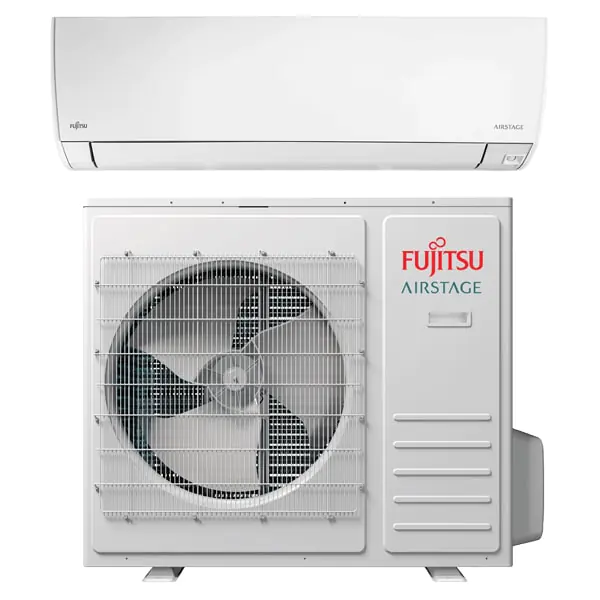
How many BTUs for a wall-mounted heat pump?
The wall-mounted heat pump is the most common option in single-family homes and condos. Energy-efficient and versatile, it provides precise comfort day after day. To get the most out of it, it is essential to choose a capacity well suited to your space.
Why capacity matters
The table below gives a quick estimate of the heat pump capacity required based on the area to be cooled. It is a reference tool our company has used for more than 15 years to guide customers toward the right unit capacity.
The values shown come from heat load calculations carried out for a typical single-storey, open-concept home, such as a standard bungalow. This type of table is an excellent basis for an initial assessment before a more detailed analysis.
Unit capacity by square footage
| Unit capacity | Area to be cooled |
| 9,000 BTU/h | 450 to 700 square feet |
| 12,000 BTU/h | 700 to 1,000 square feet |
| 15,000 BTU/h | 1,000 to 1,300 square feet |
| 18,000 BTU/h | 1,300 to 1,600 square feet |
| 24,000 BTU/h | 1,600 to 1,900 square feet |
In recent years, the arrival of heat pumps equipped with Inverter compressors has greatly improved the way cooling and heating systems work.
In the past, systems simply worked in on/off mode. When a unit was slightly oversized, it reached the desired temperature very quickly and then shut off. This led to very short cycles: the temperature dropped quickly, but there was not enough time to remove the humidity from the air. Even if the temperature seemed right, indoor comfort was often less pleasant.
Modern wall-mounted heat pumps now use Inverter technology, which allows the compressor to modulate its speed continuously according to the building’s actual demand. Rather than shutting off completely, the unit adjusts its output and can run longer at low speed.
This modulation offers several important advantages:
a much more stable indoor temperature
better control of indoor humidity
a significant reduction in on/off cycles
more consistent overall comfort throughout the house
Thanks to this technology, it is now possible to select a slightly higher capacity to improve heating performance in winter, while limiting the negative impact on cooling comfort.
This does not mean, however, that the unit’s capacity can be chosen at random. Proper sizing remains essential to ensure the system’s efficiency, durability and comfort. The difference is that with today’s technologies, the margin for error is wider than with older equipment.
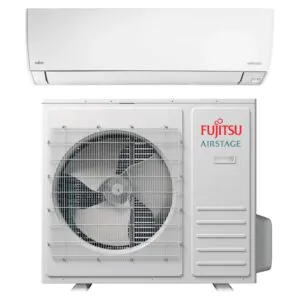
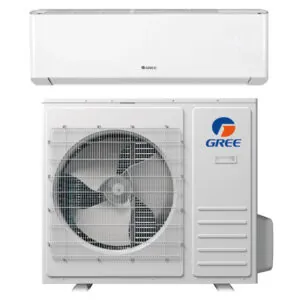

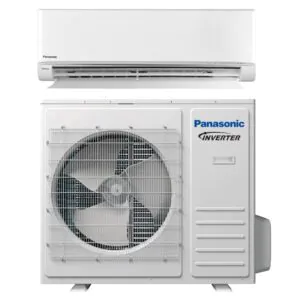

Wall-mounted heat pump buying guide (updated 2026)
Everything you need to know before buying a wall-mounted heat pump.
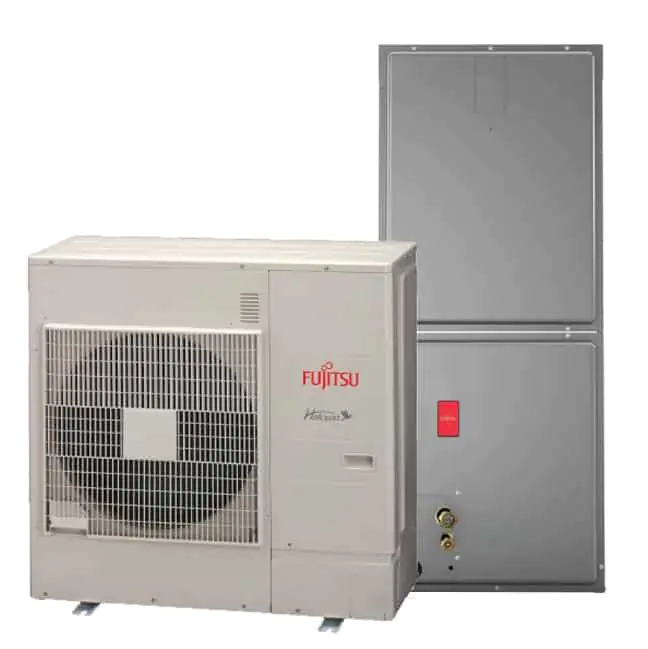
How many BTUs for a central heat pump?
The central heat pump is ideal for larger homes. Connected directly to the ductwork, it distributes heat or cool air evenly to every room.
To get a model perfectly suited to the size and layout of your home, do not hesitate to call on a professional. They will be able to assess your actual BTU needs and steer you toward the best heat pump.
Reference table – Central heat pump capacity
| Unit capacity | Area to be cooled |
| 1.5T (18,000 BTU/h) | 600 to 800 sq. ft. |
| 2T (24,000 BTU/h) | 800 to 1,200 sq. ft. |
| 2.5T (30,000 BTU/h) | 1,200 to 1,600 sq. ft. |
| 3T (36,000 BTU/h) | 1,600 to 2,000 sq. ft. |
| 3.5T (42,000 BTU/h) | 2,000 to 2,400 sq. ft. |
| 4T (48,000 BTU/h) | 2,400 to 2,800 sq. ft. |
| 5T (60,000 BTU/h) | 2,800 to 3,200 sq. ft. |
*** The load calculation does not include the basement

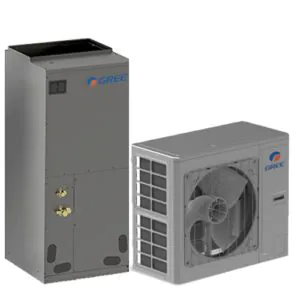

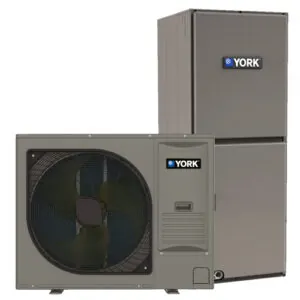
Central heat pump buying guide
Everything you need to know before buying a central heat pump.
Beyond BTUs: efficiency and comfort
The number of BTUs required is a starting point, but other criteria must also be taken into account:
- The unit’s energy efficiency (SEER and COP)
- The layout of your home
- Air circulation
- The quality of the insulation
- Sun exposure
In short, choosing a heat pump based only on square footage can lead to a unit that is too powerful or undersized. Working with a professional gives you a heating and cooling system perfectly suited to your needs.
At Les Entreprises MPH, we advise North Shore homeowners so they find the wall-mounted or central heat pump best suited to their property. Our team of certified technicians carefully assesses the number of BTUs per square foot required, while taking into account your specific cooling and heating needs.
Ask our experts for advice
Your comfort and satisfaction are at the heart of our priorities.




Get your free quote in 30 seconds — no commitment.
- ✅ 100% free evaluation
- ✅ Fast response
- ✅ 30+ certified employees
- ✅ No subcontractors





Leave a Reply