

How much will you save with a heat pump?
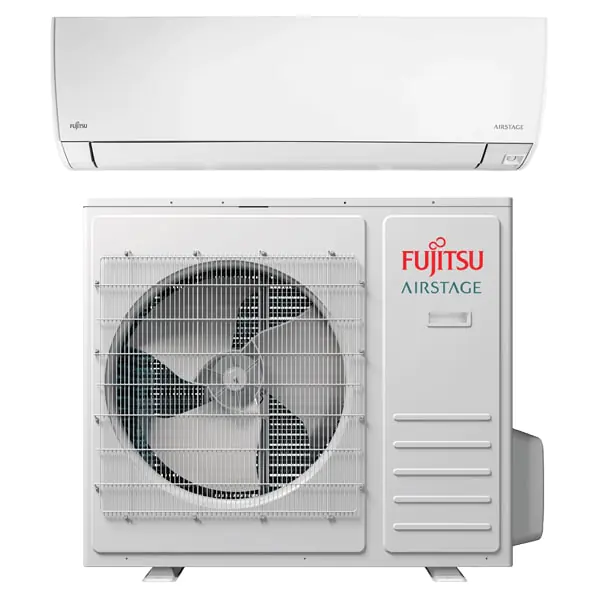
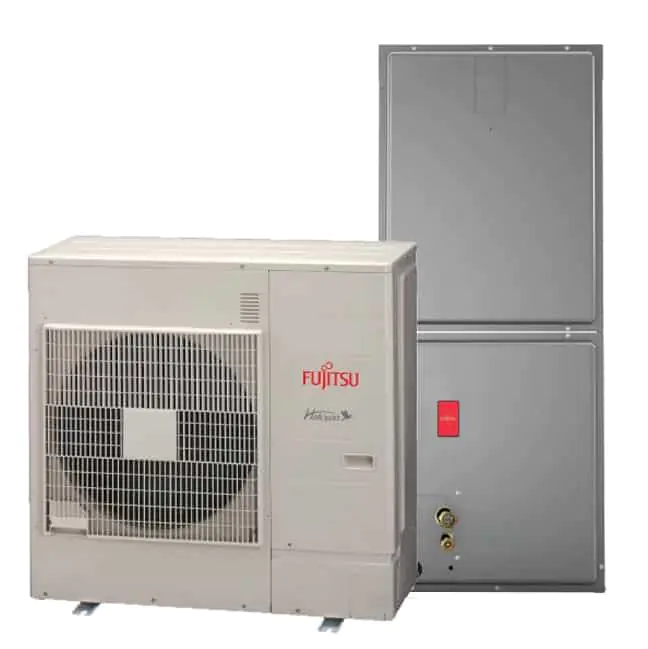
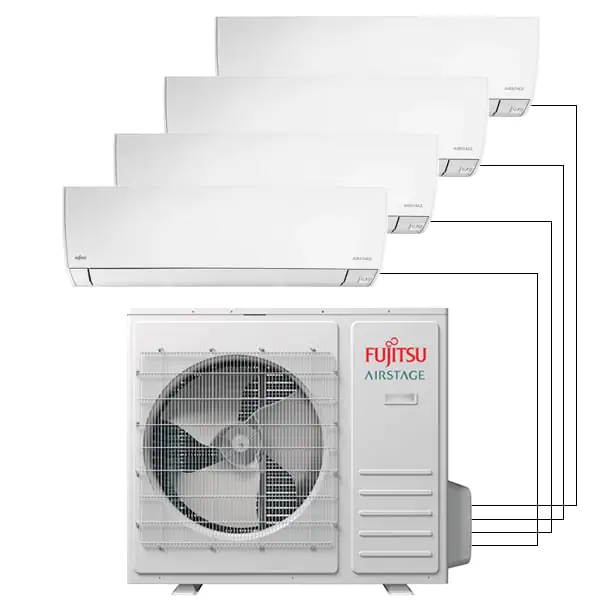
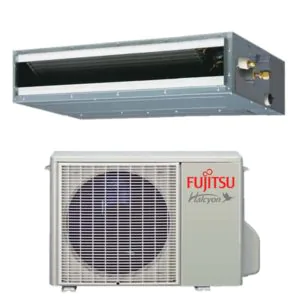
Choose what you want to heat (one room, several rooms or the whole house), describe your home, then pick one of the 118 heat pumps we install: wall-mounted, multi-zone and central. The calculation replays ten real winters, hour by hour, with each unit’s certified ratings and Hydro-Québec’s 2026 rate. Everything is detailed, and everything can be changed.
- CSA-F280 the Code’s method
- 87,600 hours of weather per region
- 118 certified heat pumps
- 2026 Hydro-Québec rates
- CSA-F280 method
- 10 real winters
- 118 models
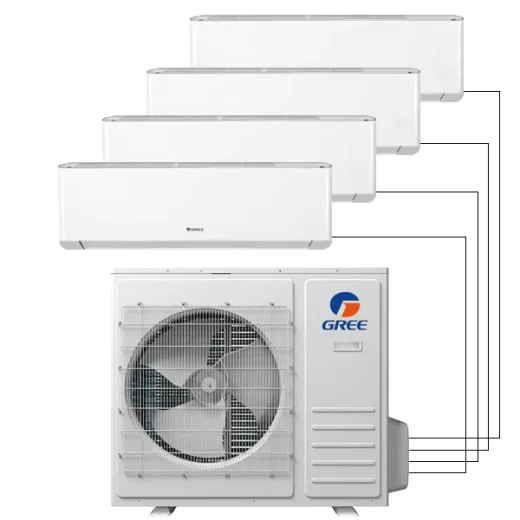
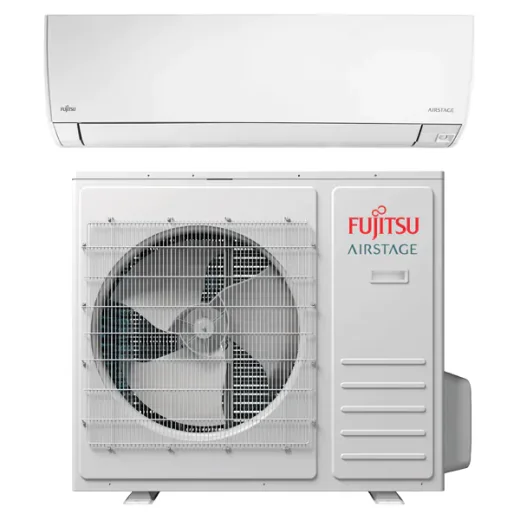
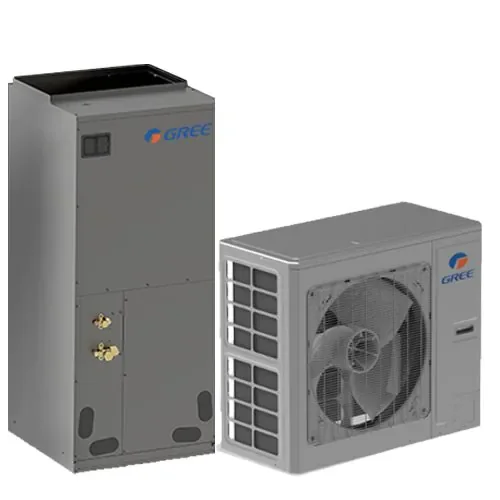
What do you want to heat?
- Heated by the heat pumpHeat pump
- Your current heatingCurrent heating
- Line to the outdoor unitLine
Not sure? Air vents in the floors or walls mean your home has ducts: choose central. No ducts (baseboards, hot water radiators): a wall-mounted unit for one room or an open area, a multi-zone for several rooms.
Precise calculations, an estimate. CSA-F280 method, ten real winters in your region and certified manufacturer data. The result depends on the values entered, your home and the equipment: it is confirmed during the free assessment at your home, and only the signed quote and contract bind Les Entreprises MPH.A precise estimate, confirmed at your home. Terms of use →
Tell us about your home
Your home
One indoor unit per floor is often enough. Add one for a closed room that needs its own temperature.
The room where it is installed and the open rooms connected to it.
The grilles that blow air in, not the return-air grilles.
Ceiling height
Garage, store, cathedral ceiling: up to 24 ft. The height applies to the floors above ground; the basement keeps 8 ft.
Built in 2005 or later: no need to check.
Your comfort
Today
Dual energy: an electric furnace and a fuel-fired one, on Hydro-Québec’s rate DT. At the switch-over temperature and milder, electricity heats at 5.90¢/kWh (taxes included); colder, Hydro-Québec’s sensor switches heating to fuel. With a heat pump, it heats above that temperature; below it, the fuel takes over, as today. The Magdalen Islands do not have access to this rate.
The price per cubic metre on your Énergir bill: about $0.75 taxes included.
−12 °C in most regions, −15 °C in cold regions (Abitibi, Saguenay…): your bill or your installer will confirm it.
The price per cubic metre on your Énergir bill: about $0.75 taxes included.
Under 10 years: variable speed, it heats down to about −25 °C. 10 to 20 years: a standard heat pump that stops around −15 °C. Over 20 years: fixed speed and R-22 refrigerant; it stops around −10 °C and gives less heat per kWh. Its age also counts for cooling, if it cools your home in summer.
Hydro-Québec Rate D as of April 1, 2026, taxes included: heating lowers the 2nd tier in winter, cooling is billed at the 1st-tier price in summer.
Hydro-Québec rate DT as of April 1, 2026, taxes included (5.131¢/kWh before taxes): it applies at the switch-over temperature and milder, and to cooling too. Colder, heating switches to fuel.
BTU/h
Choose your heat pump
Brand
Series from entry level to top performer
Your furnace
This series is installed with its own electric air handler.- It supplies at
- The home needs at
- It supplies at
- The needs at
Your
Ceiling height
Garage, store, cathedral ceiling: up to 24 ft. The height applies to the floors above ground; the basement keeps 8 ft.
Built in 2005 or later: no need to check.
- over years
- off your heating bill
- LogisVert subsidy:
Calculated hour by hour over ten winters (2016 to 2025) in , with the CSA‑F280 standard’s method and the unit’s certified listing. See the calculation →
- Heating today
- Heating with the heat pump
- Savings on heating
- Cooling today
- Cooling with the heat pump
- Difference on cooling
How we calculate your savings
The Code’s method for heat loss, replayed hour by hour over ten winters in your region.
- 1
Your home
What it loses through its walls, roof, windows and air leaks, according to the year it was built and its upgrades: the CSA‑F280 standard’s method.
- 2
Your climate
- 3
Your heat pump
For each of those hours, the heat its certified listing (NEEP) allows at that temperature; backup heat covers the rest.
- 4
Your bill
Before and after, at Hydro-Québec’s 2026 rates (or your heating oil or propane price), cooling included.
Checked against Natural Resources Canada’s energy-use statistics. All the details: the step-by-step calculation, the assumptions and the sources.
Month by month
What heating and cooling the room costs each month, averaged over the 2016 to 2025 winters. Tap a column to read its figures.
See the month-by-month table
| Month | Average temperature | Heat required (kWh) | Supplied by the heat pump | Today | With the heat pump | Savings |
|---|
Degree by degree: what heats, and when?
The colder it gets, the more heat the room needs, and the less a heat pump can supply. Where the two curves cross, backup heat takes over.
The winter, from mildest to coldest a typical winter ·
| Outdoor temperatureOutdoors | Time per yearTime | Share of the winter’s heatHeat | Who heatsWho heats |
|---|
The year’s heat, degree by degree Each column: all the heat of a year at that temperature.
See the degree-by-degree table
| Outdoors | Hours per year | Room need (BTU/h) | Heat pump max. heat (BTU/h) | Heat for the year (kWh) | By the heat pump | By backup heat | Heat pump electricity (kWh) |
|---|
The records, year by year
Is it the right size?
A heat pump that is too small leaves the backup heat working; one that is too big runs in short bursts. Here is what your room needs in extreme cold.
- Room need at
- Heat pump heat at
- Room need at −30 °C
- Heat pump heat at −30 °C
The recommended size
An advisor confirms the capacity on site: windows, ceiling height, orientation and neighbouring rooms count too.Only want the required capacity, at the temperature of your choice, without choosing a unit? Capacity calculator
Payback
Hydro-Québec’s LogisVert subsidy is paid once; the savings come back every year. Enter your quote price to see how long the heat pump takes to pay for itself.
- LogisVert subsidy
- Your cost after the subsidy
- The heat pump pays for itself in
The most cost-effective wall-mounted heat pumps for your room
Same room, same winter, same electricity price, without the price of the units. Tap a column heading to sort, “Choose” to redo the calculation with another model.
| Model | Savings per year | Savings over years | Subsidy | Cost per year with it | Heat supplied | Max. heat at (BTU/h) | Heats down to | SEER2 | HSPF2 region V | Choose |
|---|
The calculation, step by step
Your figures, in the order the calculation produces them.
Every assumption, adjustable
The default values are those of a typical Québec home. If you know yours better, change them: the whole calculation follows.
What the calculation assumes by year built
| Built | Attic | Walls | Foundation | Windows (U) | Airtightness (ACH₅₀) | HRV |
|---|
Typical effective values for a home AS BUILT, from Québec’s 1983 energy regulation, the 2012 Construction Code, the Novoclimat requirements and the measured airtightness of Canadian homes; between two years of the table, the calculation moves gradually from one to the other. What was upgraded (homes built before 2005) replaces the upgraded part: windows U 1.6 and 15% less air leakage, R-40 attic, walls +R-8 and 15% less air leakage, R-15 basement, airtightness 25% less air leakage. Everything is checked against Natural Resources Canada’s heating statistics by era. For a home you know better (blower-door test, re-insulated attic), the capacity calculator accepts your own values.
Frequently asked questions
Will my savings be exactly these?
No: it is an estimate, and a serious one. It replays ten real winters with each unit’s certified ratings, on a home calculated component by component (roof, walls, windows, air leakage, ground) according to its era. Your bill also depends on your habits, your windows, the doors you close and where the unit is placed. The order of magnitude is reliable; an advisor fine-tunes it at your home.
Where do the insulation values for each era come from?
From the rules that applied to new homes: Québec’s first energy regulation (1983: R-30 attic, R-20 walls), the 2012 Construction Code (R-41 attic, R-22 effective walls, ENERGY STAR windows, heat-recovery ventilator) and the Novoclimat requirements (R-58 attic, 1.5 air changes per hour at 50 Pa). Airtightness comes from measurements on tens of thousands of Canadian homes. Homes built before 1983 are described as built (R-10 to R-15 attic, R-7 to R-11 walls): what was upgraded since is checked in step 2. Between two eras, the calculation moves gradually from one to the other according to the year built. Everything is checked against Natural Resources Canada’s heating statistics, era by era. The full table is under “Assumptions”.
My home is renovated: what should I enter?
The year it was built, then check what was upgraded since (the question appears for homes built before 2005): windows replaced, attic re-insulated, walls insulated (insulation added, often when the siding was replaced), basement insulated, airtightness improved (air sealing, often after a Rénoclimat test). Each box replaces the upgraded part with today’s insulation; with no box checked, the home is counted as built. Not sure of the year? It is on your municipal tax bill. To enter your own values (a blower-door test, the insulation installed), use the capacity calculator.
Why the HSPF2 region V rating?
Manufacturers certify two seasonal heating ratings: region IV, a temperate climate, and region V, a cold climate, the closest to Québec. We use region V for every model: the same rule for all, and the most cautious.
Wall-mounted, multi-zone or central: which one for me?
A wall-mounted unit heats the room where it is installed and the open rooms connected to it. A multi-zone connects several indoor units, one per room, to a single outdoor unit: for closed rooms, without ducts. A central heat pump heats the whole house through your furnace ducts. Choose in step 1 and compare; an advisor confirms on site, free of charge.
How many indoor units for a multi-zone?
One per floor, to start: an open floor heats well with a single indoor unit. Add one for a closed room that needs its own temperature, a bedroom or an office. Each indoor unit’s size follows the area it serves: 9,000 BTU up to 700 sq ft, 12,000 from 700 to 1,000, 15,000 from 1,000 to 1,300, 18,000 from 1,300 to 1,600, 24,000 from 1,600 to 1,900 sq ft. In extreme cold, the outdoor unit is what heats the home, and heat produced downstairs rises to the floors above: its size is what the calculation adjusts to the insulation. Together, the indoor units can add up to about 130% of the outdoor unit; they then share its capacity, and that capacity must be enough for the home. It is also the one the calculation counts. Floors without an indoor unit stay heated as they are today, and the calculation leaves them out.
What is a supply vent, and why count them?
It is a grille that blows warm or cool air into a room, in the floor, wall or ceiling. Do not count the return-air grilles, the large ones that draw air in. A central heat pump moves about 400 cubic feet of air per minute per ton, and a vent lets about 100 through: so it takes about 4 vents per ton. With too few vents, an oversized heat pump would be noisy and less efficient: the calculator then recommends the size your ducts can carry, and an advisor checks them on site.
Do I keep my furnace or get a new one?
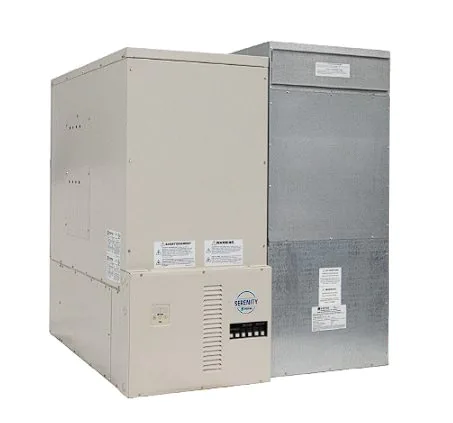
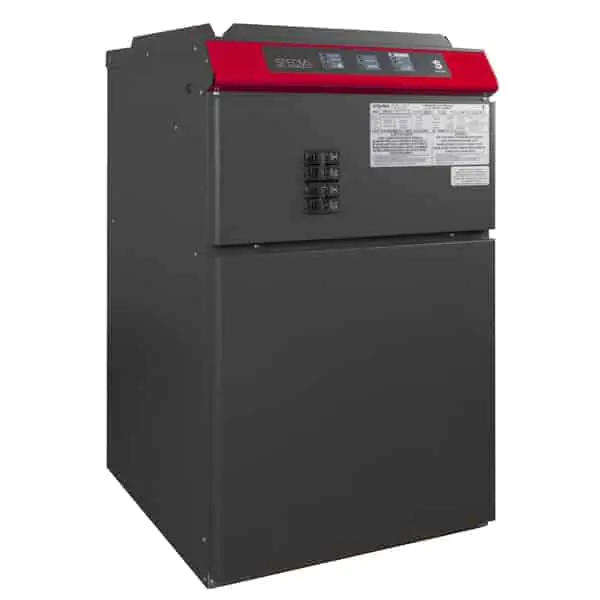
A central heat pump is installed on your furnace, with a coil fitted above it, or with a new electric air handler made for it. Both are AHRI-certified, with different ratings: the calculation uses the rating of the system you choose. If you keep an oil or propane furnace, it is only used as backup, in extreme cold.
What about the basement?
Answer “Yes” to “Basement” if it is heated like the rest: it counts in the heat need, and so in the recommended size (its buried walls and slab lose heat to the ground, which is warmer than the air). “No”: no basement, or it stays tempered by its own heating, and the calculation only counts what the ground floor loses to it.
What happens when it gets colder than the unit’s limit?
It stops, and your baseboards or furnace take over. The calculation counts those hours, at the price of electricity or fuel. That is why a “cold climate” model saves more in Québec.
Why can cooling add a cost?
If you have no air conditioner today, the heat pump brings you new comfort in summer: the calculation honestly adds it to the bill afterwards. If you have a window air conditioner, the heat pump uses two to three times less electricity for the same cooling.
Which electricity price is used?
Hydro-Québec Rate D as of April 1, 2026. In winter, heating lowers the 2nd tier: 11.142¢ per kWh (12.81¢ with taxes). In summer, cooling is billed at the 1st-tier price: 7.065¢ (8.12¢ with taxes). You can change them in step 4.
Is the subsidy counted in the savings?
No: it is shown separately. Hydro-Québec pays it once, under LogisVert, and it lowers the cost of the unit in the payback calculation. The savings, on the other hand, come back every year.
What about defrosting and the base pan heater?
Defrosting is included in the certified HSPF2 rating. The base pan heater, which keeps the outdoor unit’s base free of ice, is not counted for any model: few manufacturers publish its power. Allow about 100 kWh per year.
How do I choose the capacity?
The calculation recommends the smallest unit in the series that supplies 95% of the room’s or home’s heat over the year — that is where the savings are —, never smaller than the minimum for the area; your insulation, your set temperature and the heat from appliances and occupants count, and backup heat covers the colder hours. The “alone down to” temperature (−20 °C by default) does not make the unit bigger: it shows what the unit supplies in that cold, and which series heat on their own down to it in the same size — in extreme cold, the series makes the difference, not the size. A bigger unit costs more, saves less (it runs less well in mild weather, nearly all winter long) and cools too much in summer. The Code’s figure (22 °C, no free heat) is about 10 to 15% higher: a safety margin meant for a furnace, which would oversize a heat pump. Natural Resources Canada’s sizing guide also sizes on the home’s need, with backup heat in extreme cold. An advisor confirms on site, free of charge.
I heat with oil or propane
Choose it in step 2 (“Your home”) and enter the price of your last delivery. The heat pump supplies the heat with electricity; the furnace is only used as backup, in extreme cold.
For which region is this calculated?
For the region you choose in step 2. By default, Montreal, Laval and North Shore: hour by hour, the average of the Trudeau and Mirabel airports over ten years (2016 to 2025). From Montreal to Saint-Jérôme, L’Assomption and Brownsburg, heating changes only by −5 to +8%: the same region is enough, and the same size is recommended. Each of the other regions has its own Environment Canada station, recorded hour by hour over the same ten years. The Laurentians (Sainte-Adèle, Saint-Sauveur…) have no station recording the temperature hour by hour: their winter is estimated from Montreal, Laval and North Shore’s, cooled month by month by the difference measured in Saint-Hippolyte (about 15% more heating).
Sources and method
Every document consulted, on November 3, 2026.
- Terms of use of the calculators
- NEEP listings for the 118 models, wall-mounted, multi-zone and central (AHRI-certified data: capacity at each temperature, seasonal ratings)
- Québec Construction Code, Part 11 — Energy efficiency (2012): thermal resistances, windows, HRV (APCHQ technical sheet, in French)
- Québec’s 1983 energy regulation for new buildings: the RSI values of the time (Régie de l’énergie, R-3552-2004, in French)
- Novoclimat technical requirements — Homes (2021): effective resistances, airtightness at 50 Pa, HRV (in French)
- Airtightness of Canadian dwellings (Ismaiel et al., 2023, 65,500 measured homes)
- Heating requirements of Québec homes by construction era (Natural Resources Canada, tables 32 and 33)
- Consumption of a home based on its characteristics (Hydro-Québec: 22,000 kWh, 57% of it heating)
- Estimating a home’s heating load: the CSA-F280 standard, 22 °C, January 2.5% (Écohabitation, sheet CH-2, in French)
- Air-Source Heat Pump Sizing and Selection Guide (Natural Resources Canada, CanmetENERGY, 2020)
- ENERGY STAR database of certified heat pumps
- List of heat pumps eligible for LogisVert (Hydro-Québec)
- Electricity rates as of April 1, 2026 (Hydro-Québec)
- Historical hourly climate data (Environment Canada)
The calculation uses, degree by degree and month by month, the hours at each temperature recorded from 2016 to 2025 by Environment Canada at the station of the chosen region (87,600 hours per station; for Montreal, Laval and North Shore, the average of the Trudeau and Mirabel airports); it is the air temperature, in the shade, wind chill not included. The heat need is calculated as the CSA-F280 standard prescribes (the Code’s method for sizing a heating system), simplified: each heated level loses heat through its roof, walls, windows and doors (area ÷ thermal resistance), through air leakage and ventilation, and to the ground; the areas are derived from each level’s floor area (8 ft ceilings, windows at 14% of the floor area), and the year built sets the typical envelope values, replaced by what was upgraded (table under “Assumptions”). The room of the wall-mounted unit, the floors where you put a multi-zone indoor unit, the whole house for a central heat pump. Free heat (sun, appliances, occupants: 6 W/m²) reduces the need, for the energy as for the size; the Code ignores it, a margin that would oversize a heat pump. The heat pump supplies what its certified capacity allows at each temperature (NEEP listing, AHRI data; every listing is checked, and a measurement that is inconsistent in extreme cold is corrected from the manufacturer’s technical sheet); below its operating limit, or when its capacity is no longer enough, backup heat makes up the rest. The recommended size is the smallest in the series that supplies 95% of the year’s heat, never below the minimum for the area; at the chosen cold (−20 °C by default), the calculation shows what it supplies. Its consumption follows its certified HSPF2 region V seasonal rating, the coldest, defrosting included. In summer, the cooling need follows the hours above 22 °C, and consumption the SEER2 rating. Heating oil and propane: 38.7 and 25.3 MJ per litre, natural gas: 37.9 MJ per cubic metre (Natural Resources Canada), at your furnace’s efficiency. An estimate: actual consumption also depends on your habits, your windows and where the unit is placed.
Sent!
Your results will reach your inbox within a few minutes (if not, check your junk mail).
Your quote request has been received: an MPH advisor will contact you shortly.
Test mode: nothing was sent.
Get your free quote in 30 seconds — no commitment.
- ✅ 100% free evaluation
- ✅ Fast response
- ✅ 30+ certified employees
- ✅ Installations by our own technicians
