

Specialists in residential air conditioning
Our certified technicians specialize in the installation of air conditioning equipment. You can be sure the work will be done well.
An installation done according to the rules of the art
More than 20 certified installers
Continuous training
Work that is checked
Air conditioning
Air conditioning is a technique that consists of changing, controlling and regulating the climate inside a home, for comfort — a precise temperature and a suitable humidity level — or for technical reasons (medical laboratories, electronic component manufacturing, operating rooms, computer rooms).
The main characteristics changed, controlled or regulated by an air conditioning system are:
- Air temperature: changed according to the season.
- The humidity of the treated air: humidification or dehumidification.
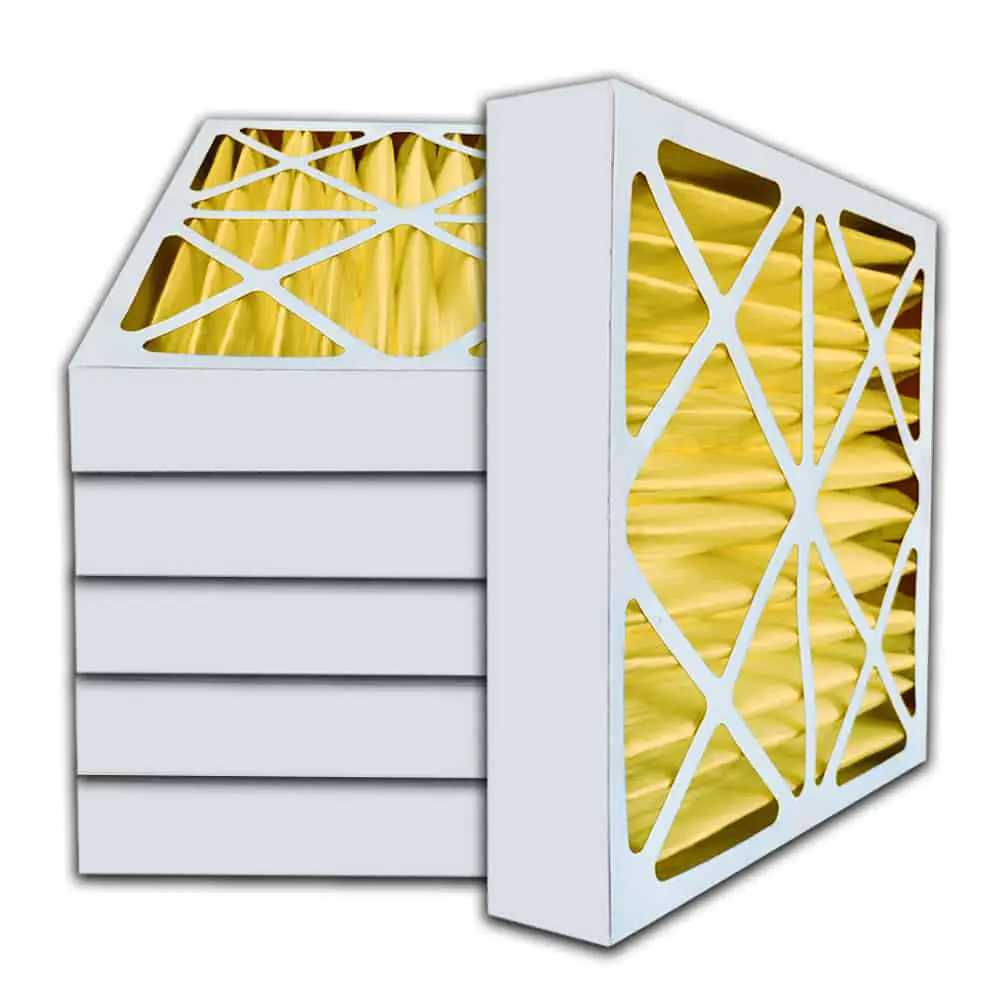
- The dust content of the air: air treatment with filters.
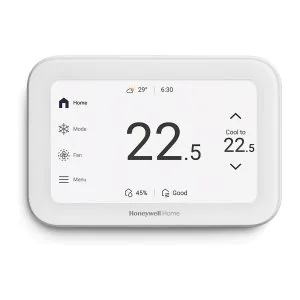
- Permanent control of indoor conditions: regulation.
How does an air conditioning system work?
There are several types of air conditioners, but they all work the same way. Every air conditioning system has a compressor, which compresses the refrigerant to turn it into vapour: this is called the “hot gas”.
The refrigerant vapour is then cooled by a component called the condenser, which extracts the heat from the gas to turn it into a liquid (each refrigerant has its own boiling point).
Once liquid, the refrigerant flows to an expansion valve, an electronic or mechanical valve that makes the gas expand suddenly: the “flash gas”. Think of a can of hairspray: inside there is liquid, and when you press the trigger, a gas comes out and evaporates. When the liquid passes through an opening the size of a hair, it turns into gas: this is evaporation. The refrigerant then creates cold in the air conditioning coil, and the fan spreads this cold into the space to be cooled. Finally, the refrigerant starts its cycle again, drawn in by the compressor. If the system has no leak, the refrigerant is good for life.
The important thing for an air conditioning or refrigeration system is to have no leaks and the right refrigerant level; otherwise the compressor will heat up and you will have overheating problems.
Nowadays, residential air conditioners are much better protected than before: they have thermal sensors and electronic probes that detect temperature problems related to the compressor and the refrigerant. It is still very important to have your air conditioning equipment installed and checked by certified professionals.
What type of air conditioner is best for my home?
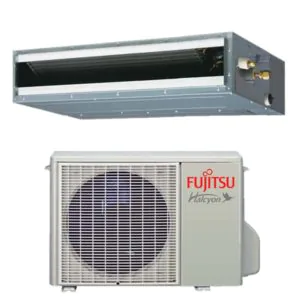
When it comes time to buy an air conditioner, it is often hard to choose among the many products available. Central air conditioner, ductless or heat pump: a certified air conditioning contractor will help you determine which unit best suits your home and your comfort needs.
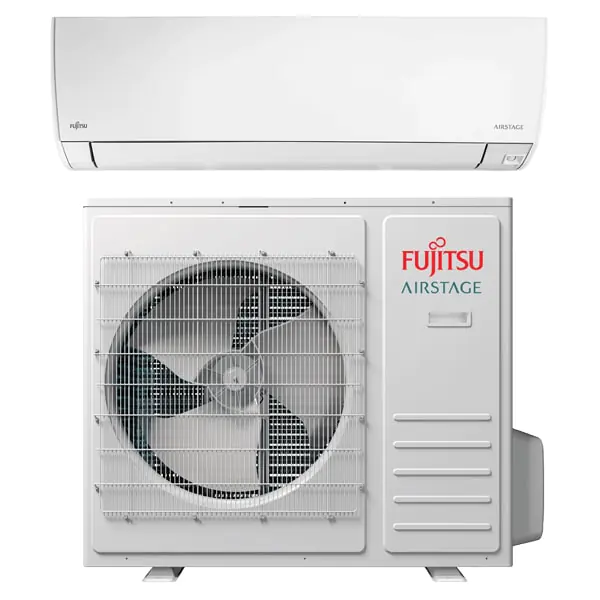
Ductless wall-mounted air conditioner
Ductless wall-mounted heat pump
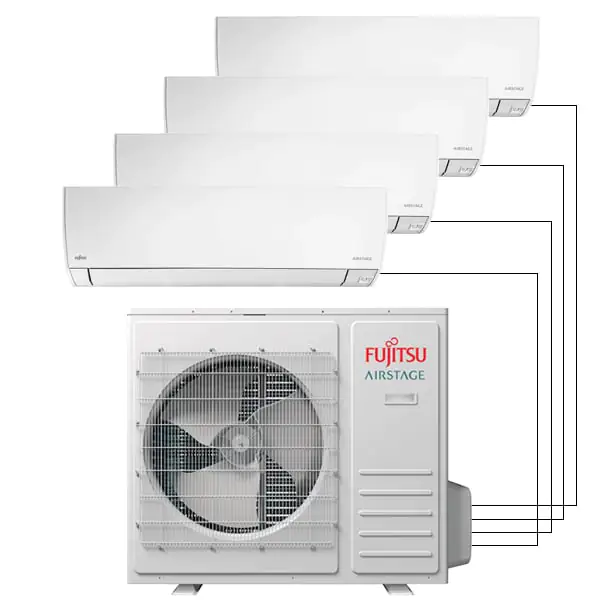
Ductless multi-zone system
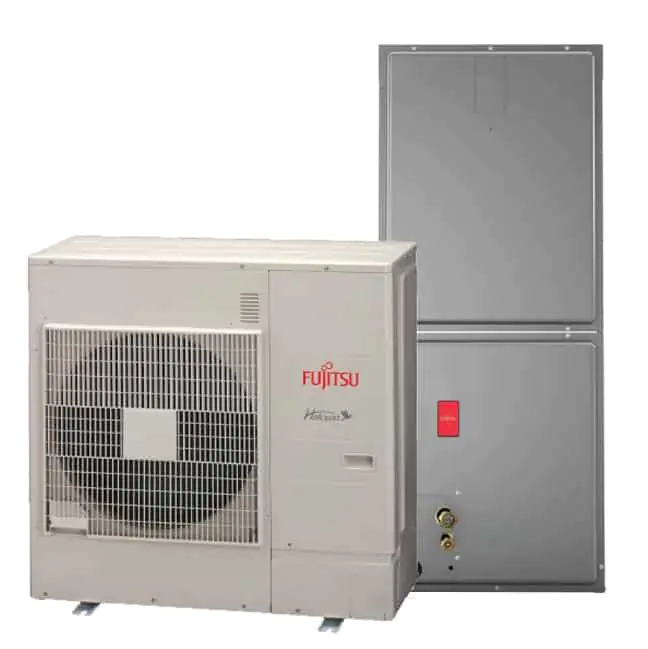
Central air conditioner
Central heat pump
Window air conditioner
Through-the-wall air conditioner
Frequently asked questions
Why choose quality?
When buying an air conditioner, it is strongly recommended to choose a high-quality product. Besides providing uniform comfort, these units last longer, thanks to how they are built and the availability of parts. They are usually backed by a manufacturer’s warranty.
What is INVERTER technology?
Inverter technology lets the compressor adjust its power to keep a stable, uniform and much more precise temperature. The air conditioner reaches the desired temperature faster and keeps it constant. The result: far fewer compressor starts and stops, a more stable room temperature, significant energy savings and a longer unit life.
How long does an air conditioner last?
Most ductless wall-mounted air conditioners and central air conditioning units last 15 years on average, and even more. Several factors can make this vary: a quality installation and regular maintenance are the best guarantees of a long life.
Does an air conditioner need maintenance?
Annual maintenance of air conditioning equipment is strongly recommended: the unit’s efficiency, proper operation and durability depend on it.
Where should a ductless air conditioner be installed?
Ductless wall-mounted air conditioners and heat pumps are very easy to install. In a condo or a bungalow, install the indoor unit in the most central room of the house. In a cottage, the top of the stairwell is often the best location. The unit should always be installed as close to the ceiling as possible, to treat the warm air that collects there.
What is the difference between R-22 and R-410A refrigerants?
HCFC-22 refrigerant contains a chlorine molecule that damages the ozone layer. Since January 1, 2010, manufacturing or importing new units that contain it has been prohibited in Canada; HCFC-22 remained available until 2020 to service existing equipment.
The vast majority of manufacturers use HFC-410A in their residential air conditioning units. This refrigerant is about as efficient as R-22, but is considered more environmentally friendly because it is less damaging to the ozone layer.
What is SEER?
SEER (Seasonal Energy Efficiency Ratio) measures the energy a unit uses compared to the energy it produces in cooling mode. The higher the SEER, the more efficient the unit: it uses less electricity for the same capacity.
What is HSPF?
HSPF (Heating Seasonal Performance Factor) measures the efficiency of a heat pump in heating mode, the same way SEER does for cooling.
Can I install a ductless air conditioner myself?
No! Whether it is a central air conditioner, a ductless wall-mounted air conditioner or a heat pump, the unit must be installed by a specialized air conditioning contractor who holds all the required licences. Their technical knowledge ensures a proper and safe installation, a long life and optimal operation of your unit.
In addition, no manufacturer will honour the warranty if the unit was not installed by a certified contractor.
Our advantages
Great customer service
Recommended by CAA-Quebec
No pressure selling
No subcontractors
After-sales service
In business since 2001
Professional staff
Quality installation
Competitive prices
Licences and accreditations
Specialists in air conditioning and heating
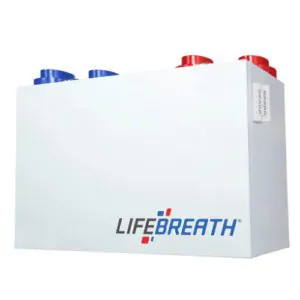
We specialize in the installation of all air conditioning, heating and ventilation equipment. We love challenges and we have a great team that will offer you solutions tailored to your needs. All our staff know their role and will advise you when the time comes to make important decisions about your equipment.
Get your free quote in 30 seconds — no commitment.
- ✅ 100% free evaluation
- ✅ Fast response
- ✅ 30+ certified employees
- ✅ No subcontractors
